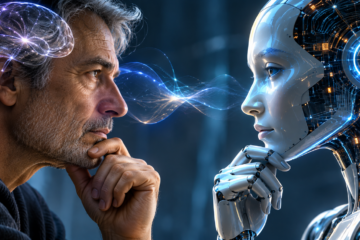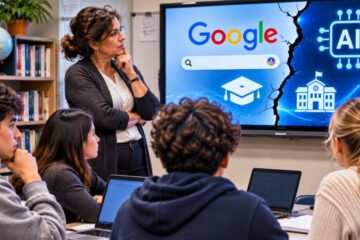
From practicing a language to understanding history or mastering a new hobby, AI can become a remarkably patient personal tutor—if you know how to use it. There is something unusual about learning with artificial intelligence. You can ask the same question five times. You can admit that you still don’t understand. You can ask for a simpler explanation, another example or an explanation so basic that you might be embarrassed to request it from another person. The machine doesn’t mind. That makes AI surprisingly useful as a personal tutor.
Suppose you’re learning Italian. Instead of simply asking an AI assistant to translate a sentence, ask it to have a conversation with you. Tell it to correct your mistakes. Ask why a particular verb changes. Request five sentences using the same grammatical rule. Or perhaps you’ve always wanted to understand photography. Ask AI to explain aperture, shutter speed and ISO without technical jargon. Then ask for an exercise you can do with your own camera. Take what you learned, try it and return with another question.
The same approach works with history, music, cooking, mathematics, gardening and hundreds of other subjects. The important difference is that AI can adapt the explanation to you. Try saying: “Explain this as if I know nothing about the subject.” “Give me an everyday example.” “Quiz me to see if I understood.” “Make this slightly more difficult.” “Show me where my answer went wrong.” That turns AI from an answer machine into something more interesting: an interactive learning partner.There are limits, of course.
AI can misunderstand a subject or confidently provide incorrect information. Important facts should still be checked against reliable sources, particularly when you’re studying something consequential or highly specialized. And AI cannot do the learning for you. It can explain how a camera works. You still have to take the photograph. It can teach you an Italian phrase. You still have to say it.It can explain a piece of music. You still have to listen. Perhaps that is the most promising role for AI in education—not replacing teachers, books or experience, but making curiosity easier to pursue. For the first time, millions of people can have something resembling a patient tutor available whenever a question occurs to them. The question may no longer be: “What can AI teach me?” It may be: “What have I always wanted to learn?”